Breast implant revision is a large part of Dr. Stephenie Poris’ practice and the procedure she is best known for in the Orlando area. She specializes in implant removal and replacement, muscle repair for animation deformity, revision breast lifts and reductions, and revision for capsular contracture. Each revision plan will begin by identifying the underlying cause of the change, as this determines the most appropriate corrective approach.
Breast Implant Revision at a Glance
These are typical starting points. Your procedure details and recovery experience will be confirmed during consultation.
Procedure Time
About 1 to 4 hours, depending on what is corrected
Anesthesia
General anesthesia
Downtime
2 to 4 weeks (no heavy lifting)
Results
Visible right away, with continued refinement over several months
Scars
Often placed in existing incisions. A revision lift or reduction adds lift-pattern scars.
Cost in Orlando
$8,000 – $15,000, with a personalized quote at consultation
What Breast Implant Revision Does
Breast implant revision can replace an implant that has ruptured or hardened, reposition one that has drifted, and change implant size, type, or placement. The same surgery can remove scar tissue, rebuild the implant pocket, and lift or reduce the breasts, or it can remove your implants for good.
What breast implant revision does not do is return your breasts to exactly how they looked before your first surgery. Implants can stretch the skin and thin the breast tissue over time, and earlier scar tissue changes how the breast heals. Some changes, such as rippling or an implant edge you can feel through thin tissue, can be improved but not erased. If your skin has lost much of its elasticity, Dr. Poris may recommend adding a breast lift to restore breast shape and position.
Which Type of Revision Do You Need?
Revision covers several different problems, and many patients need more than one correction in the same surgery.
Implant Removal and Replacement
The right choice if your implants have ruptured, aged, or no longer match the look you want.
An implant exchange removes your current implants and places new ones, often in a different size, profile, or fill. Exchange is one of the most common revisions and may follow a saline deflation, a silicone rupture found on imaging, or a change in preference. Removal alone is also an option if you would rather be implant-free.
Muscle Repair and Implant Exchange for Animation Deformity
The right choice if your breasts move, flatten, or distort when you flex your chest.
Implants placed beneath the chest muscle can shift when the muscle contracts, pulling the breast upward or toward the side. This is called animation deformity. Correction typically moves the implant to a new pocket above the muscle and repairs the chest muscle back to its natural position, often with a new implant sized for the new pocket.
Revision for Capsular Contracture
The right choice if one or both breasts have become firm, high, misshapen, or painful.
Your body forms a thin capsule of scar tissue around every implant. When that capsule thickens and tightens, it squeezes the implant, a condition called capsular contracture. Correction usually involves removing the entire capsule, called a total capsulectomy, and placing a new implant, often in a new pocket. Dr. Poris performs total capsulectomies every week.
Correcting Implant Position
The right choice if your implants have drifted to the side, too low, or toward the center.
An implant pocket can stretch and let the implant drift toward the armpits (lateral displacement), drop below the breast crease (bottoming out), or meet in the middle of the chest (symmastia). Correction usually tightens the pocket with internal sutures, a technique called capsulorrhaphy, sometimes with added internal support.
Revision Breast Lift
The right choice if your breasts have started to sag again after a lift or augmentation.
Weight changes, pregnancy, aging, and the weight of an implant can cause breasts to settle lower. A revision breast lift removes excess skin, raises the nipple and areola, and reshapes the breast tissue. Implant size or position may be adjusted at the same time to better support the new shape.
Revision Breast Reduction
The right choice if your breasts are still too large, have grown again, or have lost their shape after a reduction.
Breasts can end up larger than you hoped, uneven, or bottom-heavy after a reduction, and weight gain or hormonal changes can enlarge them again. A revision reduction removes additional tissue and reshapes the breast. Because the first surgery changed the tissue that carries blood to the nipple and areola, the plan depends on the technique used before. Your original operative report helps, and without it a more conservative approach may be safer.
Correcting Implants That Have Drifted to the Side
Lateral displacement is one of the more common implant position problems, and Dr. Poris explains it in the video below. When the outer side of the implant pocket stretches, the implants slide toward the armpits, leaving a wide gap between the breasts, nipples that point outward, and implants that fall far to the sides when you lie down. Some patients call this wide-set shape a “hammerhead” look.
Correction closes off the stretched outer part of the pocket, typically with internal sutures, so the implant stays centered behind the nipple. Some patients also benefit from added internal support or an implant with a narrower base. The goal is more natural cleavage, forward-facing nipples, and implants that stay better centered.
Planning Your Revision
Your revision plan depends on your anatomy, your original surgery, and your goals. Dr. Poris will confirm each decision with you during consultation.
01
Implant Pocket and Support
An implant can be placed above or beneath the chest muscle, and a revision may move it from one to the other. Placement above the muscle avoids animation deformity, while placement beneath it adds coverage when breast tissue is thin. Stretched or thinned tissue can be reinforced with internal sutures and sometimes a biologic or surgical mesh.
02
Implant Type and Size
Some revision patients go smaller to reduce weight and strain on their tissues, while others want a different shape or profile. Dr. Poris offers Motiva® implants and uses smooth implants only, and she will help you choose one that fits your chest and current tissue.
Are You a Good Candidate?
Some women consider revision years after their first surgery, while others notice a problem within the first year. Many had their first surgery with a different surgeon, and the details of that surgery help with planning. You may be a good candidate for breast implant revision if you:
Have a ruptured or deflated implant
Have breasts that feel hard or painful, or that distort when you flex your chest
Have implants that have shifted to the side, too low, or toward the center
Have breasts that sag again after a lift or augmentation, or still feel too large after a reduction
Want a different implant size or type, or want your implants removed
Are in good overall health, do not smoke, and are not pregnant or breastfeeding
If your first surgery was recent, Dr. Poris may recommend waiting several months or longer for your tissues to heal and your implants to settle, unless a rupture, infection, or another medical concern needs attention sooner. She may also advise waiting if you are planning a pregnancy or significant weight loss. Being told honestly to wait is part of a revision that holds up.
Dr. Poris’ Approach
Revision is where Dr. Poris spends much of her surgical time. She starts a revision by finding out what changed since your first surgery: the implant, the pocket, the scar tissue, or the breast itself. At your consultation, she will ask about your original procedure and review your operative report and implant card if you have them.
A common worry is, “What if I go through another surgery and the same problem comes back?” Recurrence is possible after any revision, so the plan targets the underlying cause, from scar tissue to a stretched pocket to an implant that never fit your chest. Dr. Poris will be honest about the chance of recurrence for your specific problem.
Double-board certified plastic surgeon
Orlando’s first female-owned and operated double-board certified plastic surgery practice
Offers Motiva® implants and uses smooth implants only
Breast implant revision is performed under general anesthesia and typically takes about 1 to 4 hours, depending on how many corrections are needed.
01
Incision
The incision is usually made through your existing scar, or along lift or reduction lines when reshaping is planned.
02
Capsule and Pocket
Scar tissue is removed or released as needed, and the implant pocket is tightened, rebuilt, or moved.
03
Implant
The new implant is placed and checked for position and symmetry, or the implant is removed without replacement.
04
Reshaping and Closure
Any lift or reduction is completed, and the incisions are closed to support healing.
Scarring: What to Expect
Implant Exchange and Pocket Correction
Most implant exchanges, capsule procedures, and pocket corrections can be done through the incision from your original surgery, adding little or no new scarring, although removing a thick capsule sometimes needs a slightly longer incision. If your implants were placed through the armpit or belly button, or your existing scar does not give safe access, a new incision is often placed in the breast crease, and Dr. Poris will show you where.
Revision Lift or Reduction
A revision breast lift or reduction uses lift-pattern incisions around the areola, sometimes extending down to and along the breast crease. If you already have lift or reduction scars, the new incisions often follow them.
How Scars Heal
Scars are usually more noticeable at first, then gradually soften and fade. Many begin improving within 3 to 6 months and continue maturing over 12 to 18 months. Final scar appearance varies based on your skin tone, genetics, incision care, and how your body heals.
Your Recovery, Step by Step
Recovery depends on how many corrections are made, and most patients can expect about 2 to 4 weeks of downtime, with no heavy lifting. A simple implant exchange often feels similar to your first augmentation, while capsule removal, muscle repair, or a combined lift may take longer.
First Few Days
Swelling, tightness, and soreness are normal. Your breasts will be supported with dressings and a surgical bra as appropriate. You will need someone to drive you home after surgery and help you during the early part of recovery.
About One to Two Weeks
Many patients return to desk work and light daily activities. Continue to avoid lifting, pushing, and strenuous arm movement, especially after a pocket or muscle repair, since the internal stitches need time to heal.
Weeks Two to Six
Swelling continues to improve as your implants settle into their new position. Weightlifting and strenuous exercise should be avoided for at least 4 to 6 weeks, sometimes longer after a pocket repair, and underwire bras for at least 4 weeks.
Around Six Weeks
Most patients can gradually return to normal exercise and full activity once cleared, while the breasts continue to soften and settle over the following months.
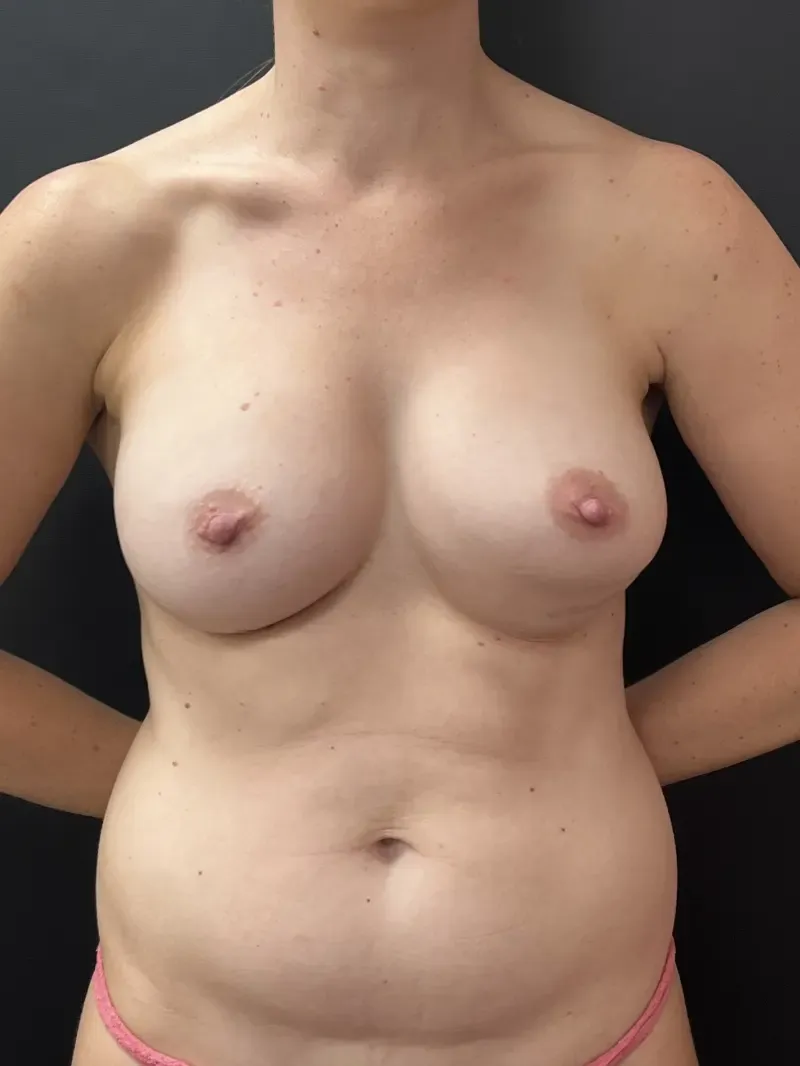
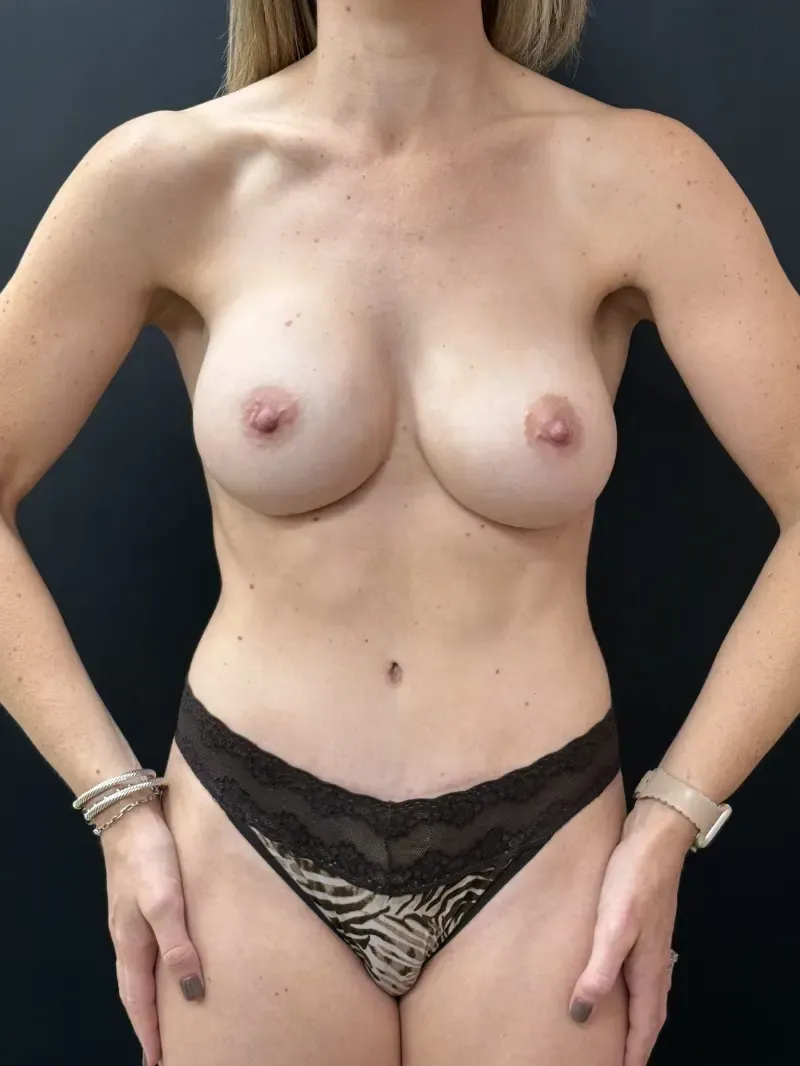
Breast Implant Revision Before and After
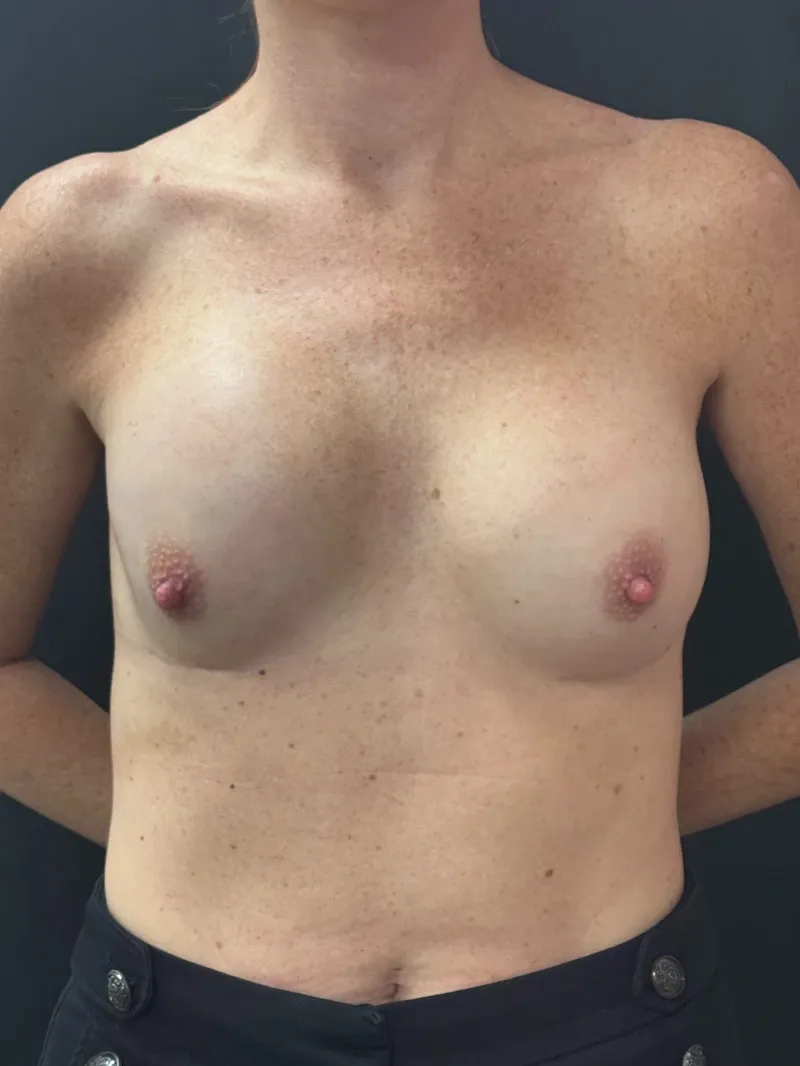
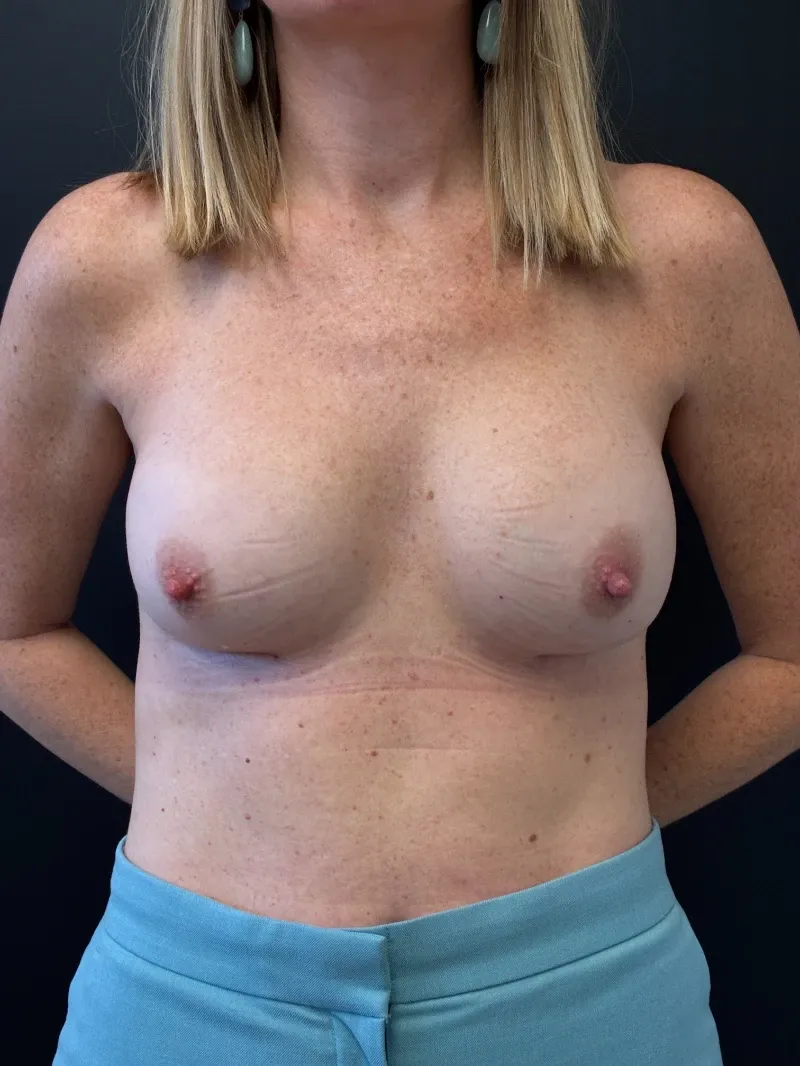
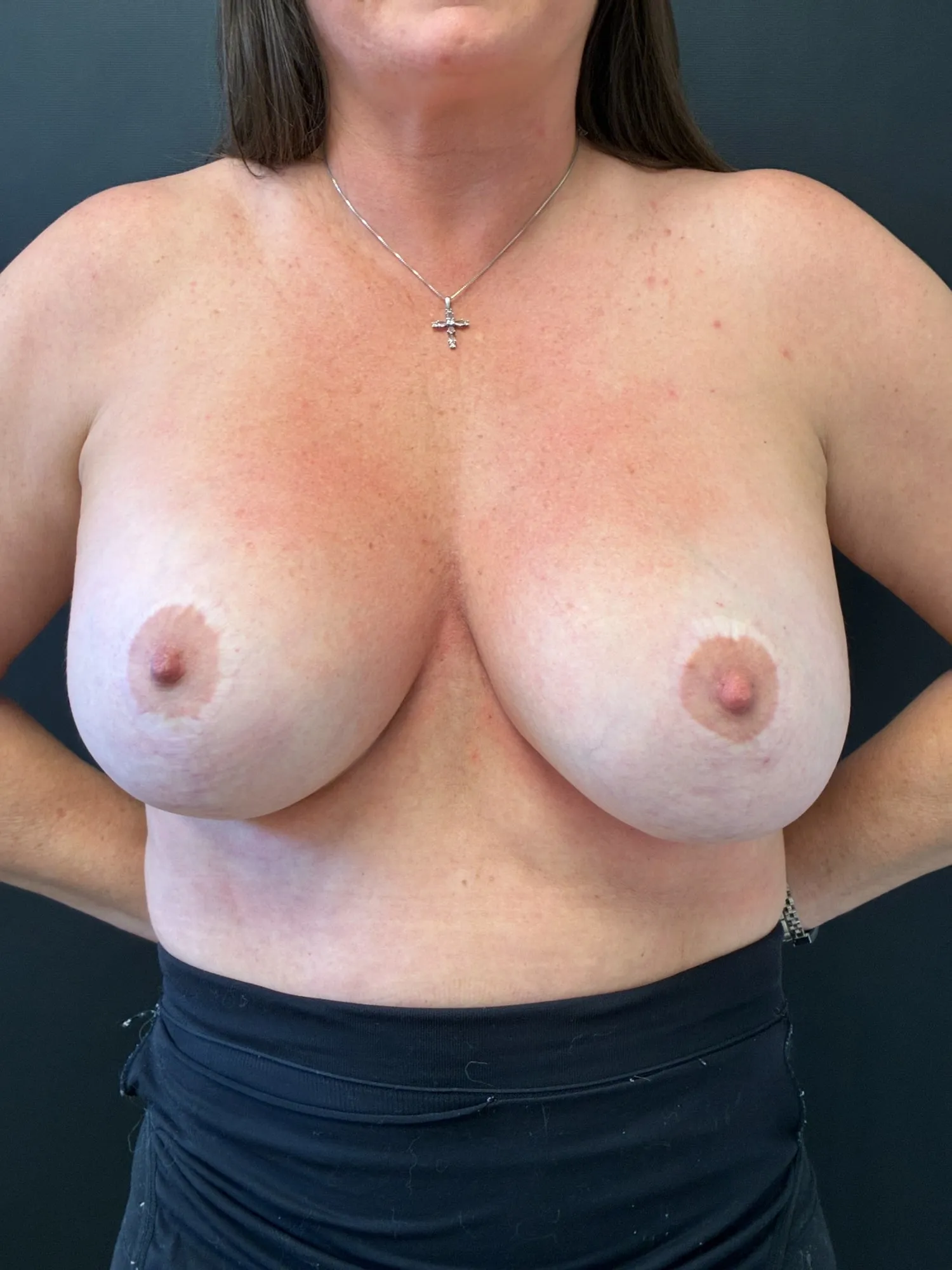
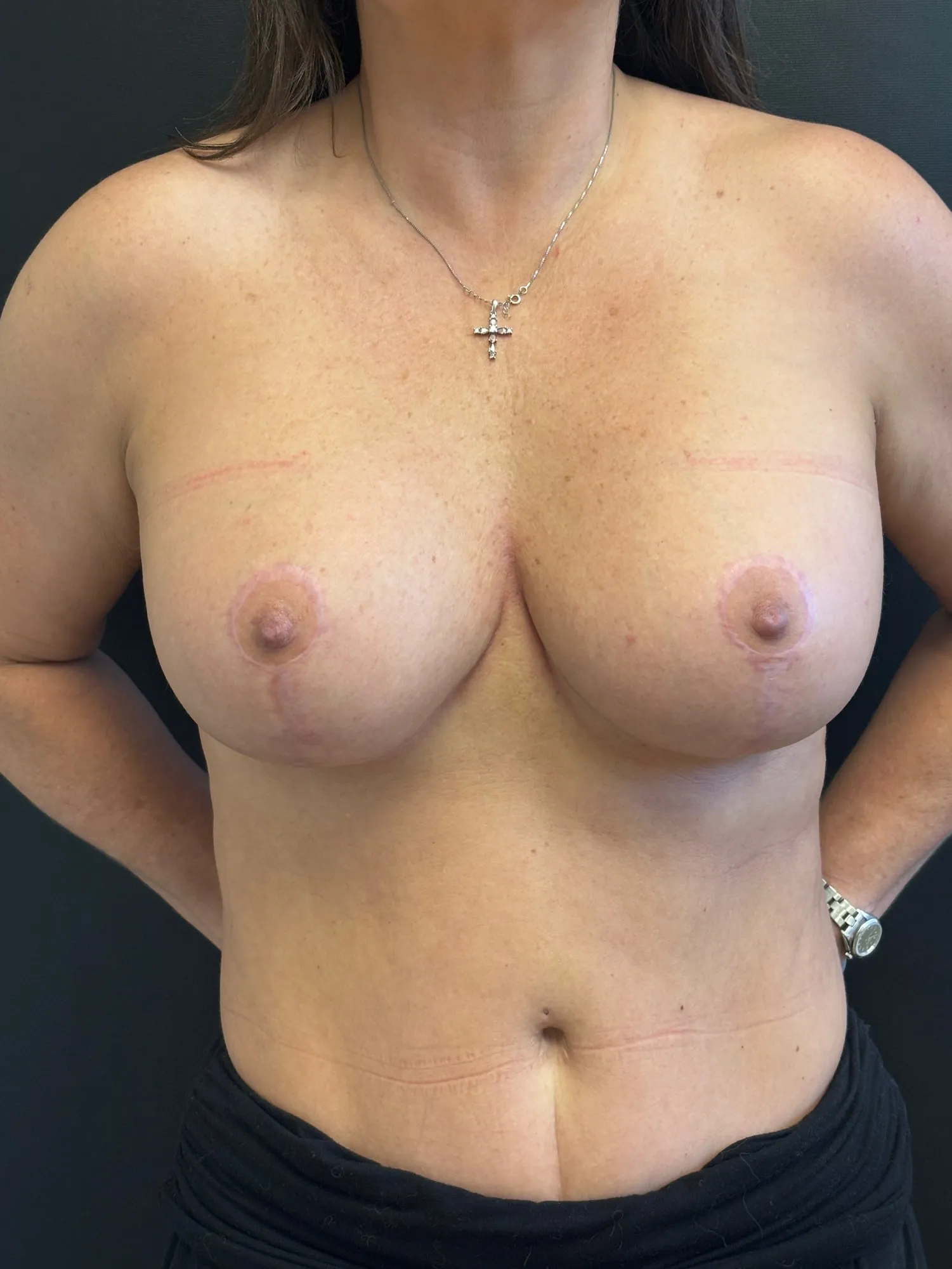
See real breast implant revision results from Dr. Poris’ patients. Look for patients with a concern like yours, such as wide-set implants, firmness, or sagging, and compare breast position, symmetry, and cleavage before and after.
What Does Breast Implant Revision Cost in Orlando?
Breast implant revision with Dr. Poris typically costs $8,000 – $15,000. Because every revision corrects a different problem, the total depends on how many corrections are needed, whether new implants, capsule removal, or internal support are involved, whether a lift or reduction is included, and anesthesia and facility fees.
Revision for cosmetic reasons is generally not covered by health insurance. If your implants are still under a manufacturer warranty, the manufacturer may cover replacement implants and, in some cases, part of the surgical cost, so bring your implant card to your consultation. Dr. Poris and her team will review your plan and provide a personalized quote.
Dr. Poris answers one of the most common questions about implant replacement.
Frequently Asked Questions
How much does breast implant revision cost?
Breast implant revision with Dr. Poris typically ranges from $8,000 – $15,000, depending on the corrections you need. An implant exchange alone is usually less involved than one that adds capsule removal, pocket repair, and a lift. You will receive a personalized quote during your consultation with Dr. Poris.
Do breast implants need to be replaced every 10 years?
Not necessarily. Breast implants are not lifetime devices, but they do not have a universal replacement timeline. Many patients keep their implants for many years without problems. Revision is usually recommended when there is a problem, such as a rupture or capsular contracture, or when you want a change in size or shape.
Can I have my implants removed without replacing them?
Yes. After removal, your breasts will be smaller and may look deflated or loose, especially if your implants were large or in place for many years. Dr. Poris may recommend a breast lift at the same time to reshape the remaining breast tissue, or fat transfer to restore some of the volume.
How do I know if my silicone implant has ruptured?
A silicone implant rupture often causes no symptoms, which is why it is called a silent rupture. It is usually found on an ultrasound or MRI, and the FDA recommends screening for silicone implants beginning five to six years after surgery and every two to three years after that. A saline rupture is easier to notice, because the implant deflates and the breast shrinks over a few hours to days. If imaging shows a rupture, Dr. Poris will discuss replacing or removing the implant.
Can capsular contracture come back after revision?
Yes. Capsular contracture can return, and the risk is higher for patients who have had it before. Removing the old capsule, placing a new implant, and moving to a new pocket can help lower that risk, but no technique eliminates it. Dr. Poris will recommend the plan most likely to lower that risk in your situation.
I have textured implants. Should I have them replaced?
Textured implants have been linked to Breast Implant-Associated Anaplastic Large Cell Lymphoma (BIA-ALCL), a rare cancer of the immune system that usually develops in the fluid or scar capsule around the implant. The FDA does not recommend removing textured implants in patients without symptoms, but some patients choose to replace them for peace of mind. If you notice new swelling, a lump, or pain in a breast with an implant, schedule an evaluation.
Can weight loss with GLP-1 medications affect my implants?
Weight loss does not change your implants, but it can reduce the breast tissue and fat that cover them. Significant weight loss, including GLP-1-assisted weight loss, can make implant edges more visible and cause sagging. If you are still losing weight, Dr. Poris may recommend waiting until your weight is stable before planning a revision.
Your revision consultation is where you find out what is causing the change you see and how it can be corrected. Dr. Stephenie Poris will examine your breasts, review your original surgery, and walk you through whether you need an implant exchange, pocket correction, lift, reduction, or removal.